



Two-component moulding
Our solutions
Moulding
in plastic, silicone and rubber
3K moulding
We also work with 3K moulding, where three materials or colours are combined in a single part. This technique is used in more advanced applications where function, design and material performance need to be fully integrated. With a controlled process and customised tooling solution, 3C casting enables high repeatability even in complex geometries.

Our solutions
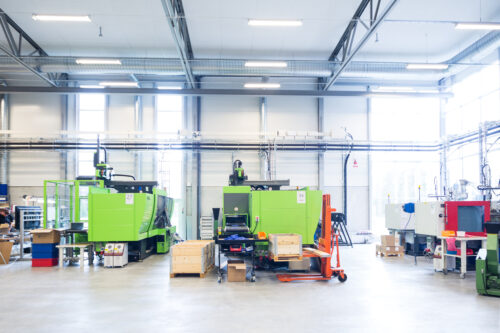
We injection mould plastics, silicone and rubber in a high-tech facility that operates around the clock. We have robot-equipped machines between 25 and 2000 tonnes and work with overmoulding, double moulding, printing on the products and laser marking. Everything as needed.
Moulding
Plastic overmoulding and double moulding
Plastic overmoulding is a common method in double moulding, where one material is applied on top of another to create, for example, gripping surfaces, seals or protective layers directly on the component. It provides a robust construction and a reliable bond between the materials. In two-component moulding, material compatibility, temperature control and tool precision are crucial for a stable and repeatable result, especially at high volumes.
Read more about plastics
Long experience in multi-component moulding
Our strength lies in the combination of process control, material knowledge and long experience of multi-component moulding. Through robotised cells, controlled process parameters and customised peripheral equipment, we can produce two-component casting and overmoulded parts with consistent quality and predictable results over long production runs. This makes the technology an effective choice for industrial applications where function, quality and production economy are closely linked.
Find out more about our materials
Sectors we work with
We are where plastic makes a difference
We supply components and solutions to several industries with high demands on precision, quality and durability.

Consumer products

Telecommunications

Automotive industry
Industry

Electronics

Sport

Construction & civil engineering

Other
Two-component moulding and double moulding are often used interchangeably and involve moulding two different materials or colours in the same tool in one continuous process. The aim is to create a finished component with multiple functions without retrofitting.
2C moulding is beneficial when features such as grips, seals or covers need to be integrated directly into the part. It reduces assembly steps, improves repeatability and results in a more robust end product, especially for larger series.
3K moulding involves combining three materials or colours in the same component. The technique is used in more advanced applications where several properties need to be combined, such as mechanical stability, flexibility and visual design in a single part.